Five years ago, my husband Ben left for what was supposed to be a familiar weekend at our family cabin in the woods. Our three sons were with him, excited for the same quiet traditions they had followed since they were small. By evening, a violent storm had rolled across the county, and before midnight our close family friend Aaron — a local police officer — arrived at my door carrying news that shattered my life.
He told me Ben’s vehicle had gone off a cliff during the storm and that none of them survived.
Grief does strange things to time. The weeks afterward passed in a blur of funeral arrangements, paperwork, sleepless nights, and daughters crying for brothers who would never come home again. Aaron became one of the few steady presences during that season. He helped with practical matters, checked on us often, and slowly became woven into the empty spaces loss had left behind. I trusted him because grief leaves little strength for suspicion.
Years passed before anything changed.
One night, my youngest daughter Lucy came quietly into my room holding an old teddy bear she had nearly outgrown. She looked frightened but determined. From inside the bear she pulled a folded note she had discovered after one of the seams loosened. The moment I saw the handwriting, my chest tightened. It belonged to Ben.
The note was short. It warned me not to trust the official story and instructed me to look beneath a rug inside the cabin.
I barely slept that night. Beside me, Aaron rested peacefully, unaware that something buried for years had suddenly begun to rise to the surface.
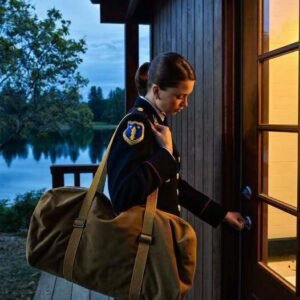
The next morning I drove to the cabin alone. Dust covered the windows and the silence inside felt heavier than I remembered. Following the instructions exactly, I pulled back the old rug near the fireplace and discovered a loose board beneath it. Hidden underneath was a sealed plastic bag containing a small recording device.
When I pressed play, Ben’s voice filled the room.
He explained that Aaron had been involved in serious corruption within the department and that he intended to expose it publicly. According to the recording, Aaron had become desperate after learning Ben planned to come forward with evidence. Ben said he feared something might happen to him and wanted the truth preserved somewhere his family might eventually find it.
I sat there for a long time after the recording ended. Part of me wanted the message to be wrong. Betrayal is often harder to process than grief because it forces you to question your own judgment alongside your memories.
Still, truth does not disappear simply because it is painful.
When I returned home, I arranged to meet Aaron privately the following morning. I remained calm and allowed the recording to play without interruption. As Ben’s voice filled the room, Aaron’s composure began to collapse. He admitted he had pursued Ben during the storm to stop him from speaking out, though he insisted he never intended for the crash itself to happen.
By then, it no longer mattered what version of guilt he preferred for himself. Fear and dishonesty had already destroyed too many lives.
I told him quietly that the recording had already been handed over to his superiors. Minutes later, officers arrived at the house and placed him under arrest.
That evening, I brought my daughters to the roadside memorial where flowers still appeared from time to time even after all those years. For the first time, I told them the full truth about their father — not only how he died, but how he chose integrity even when it placed him in danger.
The pain of losing him did not disappear. Some grief remains part of a person forever. But there was peace in knowing that the man we loved had not abandoned his values in his final moments.
And sometimes, after years of confusion and silence, truth itself becomes a form of mercy.