My Father Walked Away When My Mom Fell Ill—A Decade Later, Life Came Full Circle
I was 14, and my little brother Jason was eight, when our father decided he couldn’t face illness anymore.
Upstairs, our mother lay weak and trembling after chemotherapy for stage 3 breast cancer, while we sat on the stairs listening to the quiet of our home slowly fracture.
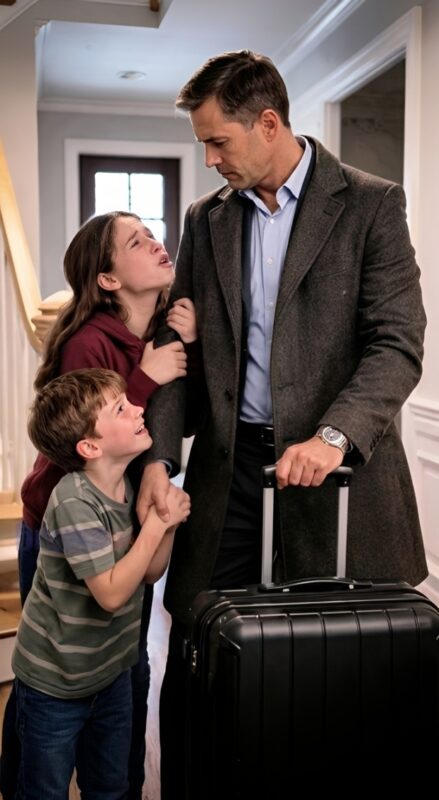
Then came the sound of a suitcase zipper. Dad’s voice followed—flat, detached. He said he “didn’t sign up for this.”
When I went upstairs, he was already ready to leave. His suitcase stood by the door, and he adjusted his watch like time mattered more than anything else in the house.
Jason ran to him in tears, saying Mom was sick. Dad didn’t shout. He didn’t argue. He simply moved Jason aside as if he were in the way. Within an hour, he was gone.
Mom didn’t cry when we told her. She just nodded slowly, as though she had already begun preparing for what life would become without him.
Not long after, we found out he had moved into a luxury condo with someone new. Then the mortgage payments stopped. The bank notices followed. Eventually, we lost our home.
We ended up in a small apartment above a laundromat, where the sound of washing machines filled the nights.
Life became harder in every possible way, but Mom kept going—through chemotherapy, radiation, and days when even standing was a struggle.
I helped her walk, cared for Jason, and worked after school at a grocery store while studying in hospital waiting rooms.
It was during one of Mom’s treatments that I first noticed the nurse—calm, steady, present in a way that made suffering feel less frightening.
Something about her stayed with me long after we left the hospital. On the bus ride home, I told Mom I wanted to become a nurse.
She looked at me—tired, but certain. “You’d be good at that.” She was right. Mom survived. And so did we.
By the time I was 19, she was officially in remission. Jason graduated. I finished nursing school. And our father disappeared from our lives completely—no calls, no messages, no trace.
Ten years later, I was Head Nurse at a neurological care facility when a new patient arrived: severe stroke, paralysis, unable to speak clearly, no family willing to take responsibility.
His young wife had already left him and filed for divorce. When I read his name, my hands went still. It was my father.
In Room 304, he recognized me instantly. Fear flashed across his face. He tried to speak, struggled, then reached for something in his belongings and pressed it into my hand. It was his old Rolex.
Inside the box was a faded photograph—Jason and me, much younger, edges worn from being held too many times. He looked at me and whispered, brokenly, “Don’t leave…”
I handed the watch back to the table. And I walked out. Not because I was cruel—but because I wasn’t the one who had left first.
That night, I told Mom. She listened quietly, then said something I wasn’t ready to understand—she had already forgiven him. Not for his sake. For hers.
The next day, I returned to his room. Not as his daughter. As his nurse.
I cared for him the same way I cared for every patient—professionally, steadily, without anger.
Over time, he began to recover small pieces of himself. One day, with great effort, he looked at me and said, “You stayed.”
I didn’t respond. But I didn’t walk away either.
When he was discharged, I kept my distance. Some things don’t heal quickly. Some things don’t return to what they were.
Weeks later, a package arrived.
Inside was the Rolex again. The photograph was gone. In its place, an engraving: “For Kelly — the one who stayed.”
I kept it—not for him, but for what it proved. Then I went back to work. Because life doesn’t stop for what breaks you. And I had learned how to stay.