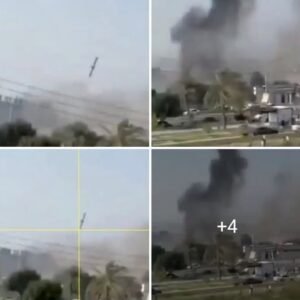
Tensions across the Middle East have intensified sharply in recent weeks, with a fast-moving chain of military actions, political messaging, and economic consequences pushing the region into a volatile and uncertain phase. What began as targeted strikes has quickly expanded into a broader confrontation involving multiple countries, raising concerns not just about regional stability but about global security and energy markets as well.
The current escalation traces back to late February 2026, when coordinated strikes carried out by the United States and Israel targeted Iranian military and strategic infrastructure. Those initial attacks marked a turning point, shifting the situation from contained tension into open conflict. Since then, the pace of retaliation has accelerated. Iran has responded with missile and drone strikes aimed at U.S. and allied positions across the الخليج, including areas near military installations in Bahrain and Kuwait. At the same time, missiles launched toward Israeli territory have triggered repeated air raid sirens, underscoring the risk of a wider, multi-front war.
What makes this moment especially dangerous is how quickly the conflict has expanded beyond traditional military targets. A significant escalation occurred when an Israeli strike hit Iran’s South Pars gas field, a critical energy site tied to one of the largest natural gas reserves in the world. The impact went far beyond physical damage. It disrupted a key pillar of Iran’s domestic energy supply and export capability, while sending immediate shockwaves through global oil and liquefied natural gas markets.
The ripple effects didn’t stop there. Reports indicated retaliatory actions aimed at energy infrastructure across the region, including Qatar’s Ras Laffan LNG complex. These developments have heightened fears about supply disruptions in a market already sensitive to instability. Countries throughout the region—Saudi Arabia, the United Arab Emirates, Kuwait—have responded by increasing defensive measures, preparing for further drone and missile threats as the situation continues to evolve.
Amid this rapidly escalating environment, political messaging has become just as consequential as military action. Former U.S. President Donald Trump has remained highly active on his platform, Truth Social, offering commentary that has drawn both attention and criticism. One particular statement became a focal point of controversy. In it, Trump claimed that Israel had acted independently in the South Pars strike and asserted that the United States had “zero involvement.” That claim was reportedly at odds with indications from some Israeli officials, who suggested there had been coordination at certain levels.
The most contentious part of his message, however, was directed toward Iran. Trump warned that if Iran carried out further attacks affecting regional partners such as Qatar, the United States would respond with overwhelming force—specifically targeting the South Pars gas field. Given the field’s shared structure with Qatar’s North Field, a critical global energy source, the implications of such a threat were immediate and serious. Analysts quickly pointed out that any direct action against that infrastructure could have massive consequences, not just regionally but worldwide.
The reaction was swift. Critics argued that strong, public rhetoric delivered through social media during an active conflict risks increasing the chance of miscalculation. In a situation where multiple actors are already engaged and tensions are high, even a single statement can shift perceptions, influence decisions, and escalate responses. Others raised concerns about how informal communication might interfere with diplomatic efforts, which typically rely on careful coordination and controlled messaging between governments.
Experts in defense and foreign policy emphasized that communication at this level does more than shape headlines—it affects real-world behavior. Markets respond. Military postures shift. Governments reassess strategies. In this case, energy markets have already shown signs of volatility, with oil and gas prices fluctuating in response to attacks on infrastructure and uncertainty about future supply. Countries in Europe and Asia, heavily reliant on energy imports, have begun reviewing contingency plans, preparing for the possibility of prolonged disruption.
Meanwhile, the conflict itself has shown no clear signs of slowing. Reports indicate that Israeli operations have continued in and around Tehran, followed by additional Iranian responses targeting assets linked to Israel. Each move triggers another, creating a cycle that becomes harder to contain with every escalation. Gulf states and international partners are increasingly on edge, adjusting their security measures as the risk of broader involvement grows.
Beyond the battlefield, the situation has sparked a deeper debate about leadership and communication in times of crisis. In Washington, some lawmakers have expressed concern that highly personalized or unfiltered statements could complicate coordination with allies and undermine established diplomatic channels. They argue that in moments like this, consistency and clarity across official communications are critical.
At the same time, Trump’s supporters see his approach differently. They view his direct, unfiltered communication style as a strength—a way to project decisiveness and clarity in a rapidly changing situation. To them, speaking openly and forcefully signals confidence and deterrence.
The divide reflects a broader challenge facing modern leadership: how to balance immediacy with responsibility in an era where every statement can be broadcast globally within seconds.
While political debate continues, the humanitarian and economic consequences are becoming harder to ignore. Damage to infrastructure has already disrupted daily life in affected areas. The threat of displacement is growing as communities near conflict zones face ongoing danger. International organizations, including the United Nations, have called for restraint, warning that continued escalation could lead to long-term instability that extends far beyond the region.
Energy infrastructure, in particular, remains a critical concern. Experts warn that even limited damage to major facilities can take years to fully repair. This means the effects of the current conflict could linger long after active hostilities subside, shaping global markets and geopolitical relationships for years to come.
At its core, the situation highlights how interconnected modern conflicts have become. Military action, energy security, economic stability, and political communication are no longer separate elements—they are tightly linked, each influencing the others in real time. A strike on a gas field is not just a military event; it is an economic shock. A social media post is not just rhetoric; it is a signal that can alter strategy and perception across multiple countries.
As the crisis continues to unfold, the path forward remains uncertain. Diplomatic efforts are ongoing, though largely out of public view, as governments attempt to manage both the immediate conflict and its broader implications. What is clear is that the stakes are high, and the margin for error is narrow.
In moments like this, decisions—whether made on the ground or communicated to the world—carry weight far beyond their immediate context. They shape outcomes, influence alliances, and determine how far a conflict might spread.
And in a region where even small shifts can trigger wide consequences, every move matters.