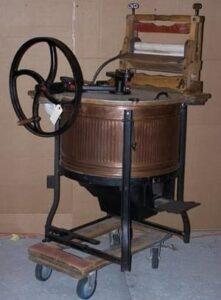
At first glance, it looks like a strange metal relic better suited to a workshop than a washroom,
and that’s exactly why this mysterious laundry device has left so many people stunned, confused, and oddly fascinated.
Once relied upon by millions of exhausted hands, its true purpose reveals a shocking glimpse into how brutally hard “simple” chores used to be… Continues…
Long before laundry rooms hummed quietly with automated cycles and digital timers, washday was a punishing ritual that consumed entire days and entire bodies.
Every step was manual, from hauling water to wringing it out of heavy, dripping fabric.
Into this world of aching backs and raw knuckles arrived the hand-cranked wringer,
a device that didn’t erase the hardship but reshaped it into something more bearable, more efficient, and—astonishingly for its time—slightly empowering.
By feeding each garment through the tight rollers, families could reclaim precious time and energy,
drying clothes faster and reducing the physical toll that had defined domestic life for generations.
What looks like a crude clamp today was once a symbol of progress, especially for women whose labor went largely unseen and uncredited.
In its chipped paint and worn handles lies a quiet testimony: even the smallest mechanical aid can mark a turning point in how we live, work, and remember the past.