Two months after the divorce, I did not expect to see Serena again, especially not in a hospital corridor that smelled like disinfectant and quiet fear.
I was thirty five, convinced the hardest part was behind me, until I saw her sitting alone in a pale gown with her hands folded in her lap like she was trying to take up
as little space as possible. Her hair was cut short in a way that did not feel like a choice, and her shoulders curved inward as if she had been carrying something
for weeks without setting it down. When she looked up and our eyes met, it felt like the air left my body, because she was the woman I used to come home to, and she was also someone I barely recognized.
We had been married nearly six years in Sacramento, built on small routines and quiet devotion, until two miscarriages drained the light out of our future plans one drop at a time. Instead of moving closer to her grief, I retreated into work and silence, telling myself I was giving her space when I was really avoiding my own helplessness.
The arguments that followed were not explosive, they were tired, the kind that happen when love is still there but no one knows how to reach it anymore. Then one night
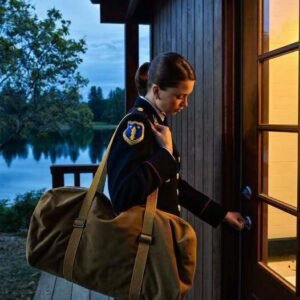
I said the words that ended us, maybe we should get a divorce, and Serena looked at me with a calm that hurt more than anger. She packed a suitcase with careful hands and walked out with a quiet grace that made me believe I was doing the sensible thing.
In the corridor, I sat beside her and saw the hospital band on her wrist and the way her fingers trembled as she twisted them together. I asked what she was waiting for, and she answered with a steadiness that felt practiced, my test results, then took a breath and told me she had early stage ovarian cancer. When I asked when, she said before we divorced,
and the shame that hit me was so sharp I almost could not speak. I asked why she did not tell me, and she gave me a small sad smile and said because you were already leaving
. I told her she should not be alone, and she said she was not asking me to stay, and I heard myself answer that I was staying anyway, not out of pity, but because the love I had tried to bury was still alive.
After that day, I became part of her life again, showing up for appointments, bringing food she could manage, learning to sit with discomfort instead of escaping it.
I listened without trying to fix everything, and slowly the space between us stopped feeling like punishment and started feeling like a bridge we could rebuild. One rainy afternoon
she told me she had been pregnant again before she got sick and lost it early, and I finally cried in front of her, because she had been carrying pain I helped create while still trying to protect me from it.
The treatment was hard, but the doctors adjusted her plan and cautious hope began to creep back into the room, and I asked if we could choose each other again, not by erasing
what happened, but by starting from truth. Months later we remarried quietly in a small park by the river, and a year after that she placed my hand over her stomach in our kitchen with sunlight on her face and told me the future had found us again, and I understood that love is not proven by staying when it is easy but by returning when it is hardest.