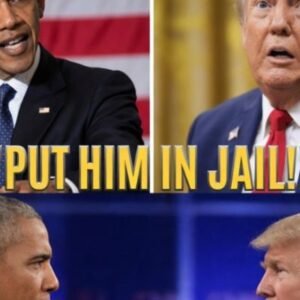
Washington, D.C. — As reactions continued to unfold following the Supreme Court hearing that drew national attention, the broader political environment surrounding the moment became increasingly charged with interpretation and speculation. What began as a narrow legal exchange has now evolved into a wider conversation about judicial influence, political accountability, and the role of public perception in shaping high-stakes legal narratives.
Observers noted that much of the attention stemmed not from any formal ruling or announcement, but from the perceived tone and framing of questions raised during the session. In the highly formal setting of the United States Supreme Court, even subtle shifts in language can carry outsized significance for analysts attempting to anticipate the direction of legal reasoning.
Legal scholars were quick to caution against overreading the exchange. Many emphasized that Supreme Court justices routinely engage in rigorous questioning designed to probe the limits of legal arguments rather than signal conclusions. In this context, hypothetical scenarios and pointed inquiries are standard tools used to test the strength of positions presented before the Court.
Still, the visibility of the hearing and its connection to politically sensitive subject matter contributed to the rapid spread of interpretations across media platforms. Within hours, clips and excerpts were being circulated widely, often accompanied by competing narratives about their meaning. Some framed the moment as potentially significant in the broader constitutional landscape, while others dismissed it as routine judicial procedure being amplified by political tensions.
Amid the growing attention, reports surfaced suggesting that political figures and advisers closely associated with former President Donald Trump were monitoring developments in real time. While these accounts originated from unnamed sources and remain unverified, they described an atmosphere of heightened alert as teams evaluated potential implications for ongoing and future legal and political battles.
According to these accounts, internal discussions focused less on any immediate legal consequence and more on how the moment might be perceived by the public and leveraged in political discourse. Strategists reportedly examined how narratives emerging from the hearing could influence voter sentiment, media framing, and broader campaign messaging.
In Washington, reactions among elected officials reflected familiar partisan divisions. Some lawmakers emphasized the importance of judicial independence and careful constitutional interpretation, arguing that it would be inappropriate to assign political meaning to routine legal questioning. Others, however, suggested that moments like these highlight the continued importance of oversight and accountability at the highest levels of government.
Despite the differing interpretations, there was general agreement among many observers that the speed at which the story escalated illustrated a broader trend in modern political communication. In an environment shaped by social media and continuous news cycles, even brief exchanges in formal settings can rapidly become national talking points.
Political analysts pointed out that this dynamic often leads to a disconnect between the substance of legal proceedings and the public narratives that emerge afterward. While courts operate on careful legal reasoning and structured argumentation, public interpretation tends to be shaped by emotion, immediacy, and selective framing of information.
As the debate expanded online, commentary ranged from measured legal analysis to highly speculative claims. Supporters of Trump dismissed the controversy as exaggerated, arguing that media coverage was amplifying routine judicial behavior into something more politically dramatic than warranted. Critics, on the other hand, suggested that the attention reflected deeper concerns about unresolved legal questions surrounding presidential authority and accountability.
The contrasting reactions underscored the broader polarization that often accompanies discussions involving high-profile political figures. In such environments, the same set of facts can generate vastly different interpretations depending on the audience’s prior assumptions and political orientation.
Meanwhile, legal experts continued to stress the importance of distinguishing between procedural questioning and substantive legal outcomes. They noted that Supreme Court proceedings frequently involve extensive back-and-forth dialogue between justices and attorneys, much of which is exploratory in nature and not indicative of final positions.
One former constitutional attorney described the situation as “a reminder of how easily legal nuance can be lost once it enters the public arena,” emphasizing that the Court’s internal deliberations are far more complex than what is visible in any single exchange.
As attention gradually broadened beyond the initial hearing, commentators began placing the moment within a larger historical pattern of Supreme Court cases attracting political scrutiny. High-profile legal disputes involving executive power, separation of powers, or electoral processes have often generated intense public interest, regardless of their eventual outcomes.
In this case, however, analysts noted that the lack of any formal ruling or direct statement made it particularly susceptible to interpretation-driven narratives. Without concrete legal action to anchor discussion, the meaning of the event became largely dependent on perception rather than definitive judicial guidance.
Looking ahead, most observers agree that the significance of the hearing will ultimately depend on subsequent developments. Future rulings, written opinions, or related cases may provide additional clarity that either reinforces or diminishes the importance of the moment currently under scrutiny.
For now, the episode remains a case study in how quickly modern political and legal narratives can accelerate, especially when they involve prominent figures and institutions such as the Supreme Court and former national leaders.
Whether this moment proves to be a meaningful inflection point or simply another instance of overinterpreted judicial dialogue remains uncertain. What is clear, however, is that the intersection of law, politics, and media continues to produce rapid and often unpredictable waves of public reaction.
As Washington continues to process the story, attention is already shifting toward what comes next—both in the courtroom and in the political arena where its meaning will continue to be debated.